
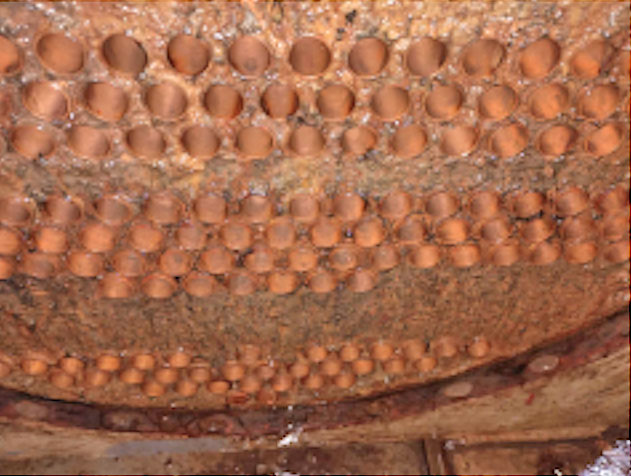
Industrial corrosion: how much is it costing your company?
The problem that no one sees until it’s too late
The sobering fact? According to NACE International (now AMPP – Association for Materials Protection and Performance), the global cost of corrosion amounts to $2.5 trillion per year, equal to 3.4% of global GDP. In Italy, this translates into over €50 billion per year in direct and indirect costs.
But the real problem is not the statistics. It is the unscheduled plant shutdown at 3 a.m. It is the loss of production for 72 consecutive hours. It is the maintenance budget that explodes at the end of the quarter. It is the plant manager who has to explain to the CEO why the operating margin has evaporated along with the cathodic protection that no one has checked for 18 months.
This article explains what is really happening to your facilities, how much it is costing you, and, most importantly, how to take action before the problem becomes an emergency.
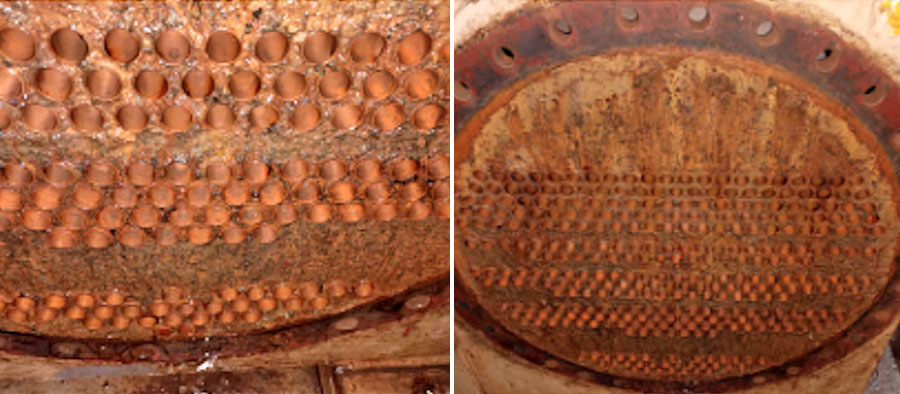
Industrial corrosion figures
Direct costs:
- Replacement of corroded components: 12-18% of the annual maintenance budget.
- Structural restoration work: €80-150/m² for coating only, excluding scaffolding and preparation.
- Plant downtime for corrective maintenance: €5,000-25,000/hour depending on the sector.
Indirect costs (the most insidious):
- Loss of efficiency: a heat exchanger with 1 mm of corrosion scale reduces thermal efficiency by 15-20%.
- Design oversizing: structures are designed with a corrosion allowance of 3-6 mm, increasing weight and initial costs.
- Increased insurance premiums for plants with a history of corrosion problems.
- Environmental impact: corrosion leaks cause 25-30% of industrial spills.
The types of corrosion that devastate plants
- Uniform Corrosion: The least dangerous because it is predictable. It proceeds at a constant rate across the entire surface. In industrial atmospheres, unprotected carbon steel loses 80-100 μm/year. Doesn’t seem like much? That’s 1 mm every 10 years. On a tank with 8 mm walls, in 50 years you have lost 60% of the resistant section.
- Pitting Corrosion: This is where it becomes dangerous. Pitting creates deep, localized cavities. The depth-to-diameter ratio can exceed 10:1. The result? A surface that appears intact hides perforations that penetrate 70-80% of the thickness. ISO 8044 classifies pitting into 6 levels of severity: when you reach level 5, you are looking at imminent replacement.
- Interstitial corrosion: Develops in interstices: between flanges and gaskets, under deposits, in areas shielded from flow. The local pH can drop to values of 3-4 even in neutral environments. The corrosion rate in these conditions increases by a factor of 50-100x.
- Galvanic corrosion: When different metals come into contact with each other in the presence of electrolyte. Classic example: stainless steel fasteners on a carbon steel structure in a marine environment. Carbon steel corrodes at a rate 5-8 times faster than normal.
- Stress corrosion cracking (SCC): The most insidious. Requires three elements: susceptible material, specific corrosive environment, mechanical stress. Failure occurs without warning, often at stresses of 30-40% of the yield strength.
- Corrosion-erosion: When fluid flow accelerates the corrosive attack. In pipe bends, where the fluid velocity exceeds 3 m/s, the corrosion rate can increase by a factor of 20-30x.
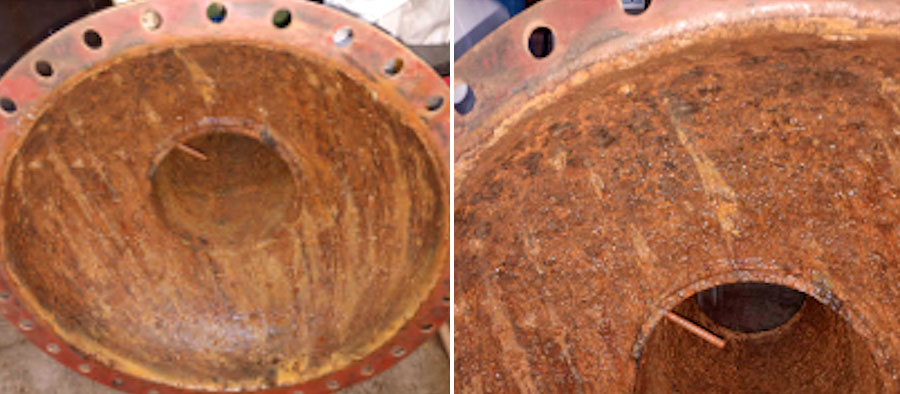
Prevention: investment or cost?
Scene A – Reactive maintenance
- Annual visual inspection: €1,500 (superficial, does not detect hidden pitting).
- Average corrective action every 3 years: €45,000 (cleaning, coating, scaffolding).
- Associated plant downtime: 8 days/year, production loss: £120,000/year.
- Premature replacement of critical components: £25,000 every 2 years.
- Ten-year cost: £1,495,000.
Scene B – Predictive maintenance
- Biennial in-depth inspection with NDT: €8,000 (ultrasound, thickness measurement, video endoscopy).
- Permanent monitoring system for critical areas: €15,000 (initial investment) + €2,000/year (maintenance).
- Scheduled preventive maintenance: £18,000/year.
- Scheduled plant downtime: 2 days/year, production loss: £30,000/year.
- Ten-year cost: £615,000.
Protection strategies: from theory to practice
- Protective barriers (Coating Systems): coatings are not ‘paint’. A coating system for C5-M class industrial environments includes:
- Surface preparation: Sa 2½ minimum.
- Multi-layer system: Primer, intermediate and finish for UV and chemical resistance.
- Cost: £85-140/m² turnkey.
- Cathodic protection: for submerged or buried structures, coating alone is not enough. Inevitable defects become points of accelerated corrosion. Two systems:
- Sacrificial anodes (SACP): zinc for brackish water/sea water; lifespan 15-20 years.
- Impressed current cathodic protection (ICCP): inert anodes; initial cost: £80-120/m².
- Material selection and design: sometimes the best solution is not to have to protect. Stainless steels: AISI 316L costs 4-5 times more than carbon steel, but in a marine environment it has a useful life of 50+ years without maintenance.
Warning signs: when inspection becomes urgent
Do not wait for the structure to collapse on you. These are the signs that require a thorough inspection within 30 days:
- Reddish surface staining.
- Blisters in the coating >10 mm in diameter.
- Localised deformations in structural elements.
- Spiderweb-like cracks in the coating.
- Whitish crystalline deposits.
Regulatory limits for existing structures
EN 1090-2 specifies the acceptability limits for structures in service:
- Thickness reduction <10%: annual monitoring.
- Thickness reduction 10-20%: structural assessment, six-monthly inspections.
- Thickness reduction >20%: immediate intervention.
Operational conclusions: where to start tomorrow morning
If you manage an industrial plant, these are the concrete actions to take in the next 30 days:
- Retrieve data from the last in-depth inspection.
- Identify the five most critical areas.
- Calculate the actual hourly cost of plant downtime.
Do not delay protecting your systems
Contact GMA for a consultation and find out how we can help you protect your structures from corrosion.
For further information about our solutions and services, please visit the section CORROSION and discover how we can help you protect and optimise your systems.
Do not wait for the problem to become an emergency; prevention is the key to ensuring production continuity.
GMA at the Heat Exchanger World Conference 2026
GMA at the Heat Exchanger World Conference 2026 Heat Exchangers: When Maintenance Becomes Strategic On May 6–7, we will be at the Heat Exchanger World Conference in Rotterdam (stand A28). But our presence means more than just being there. It's the message we bring:...
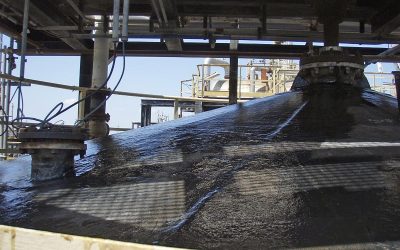
Renovation of the hexane tank roof: the GMA solution for a safe and reliable structure
Renovation of the hexane tank roof: the GMA solution for a safe and reliable structure The industrial sector is constantly evolving, and structural safety must be a top priority. In this context, GMA stands out for its ability to tackle complex problems with concrete...
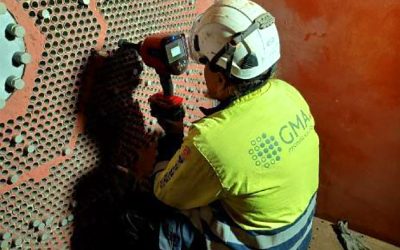
Anti-corrosion treatment of the TV2 steam condenser
Anti-corrosion treatment interventions on the TV2 steam condenserIn the industrial sector, maintenance and protection of facilities are essential to ensure efficiency and safety. The anti-corrosion treatment carried out on the TV2 steam condenser is an example of how...